
Bodensee Philharmonie audience research.
A concert organisation needs to understand more than who bought a ticket. The Bodensee Philharmonie asked how a symphony orchestra develops further without losing its artistic identity, and used an HDTwin panel to find out which direction its public backs — a course the pilot confirmed.

Beyond ticket sales
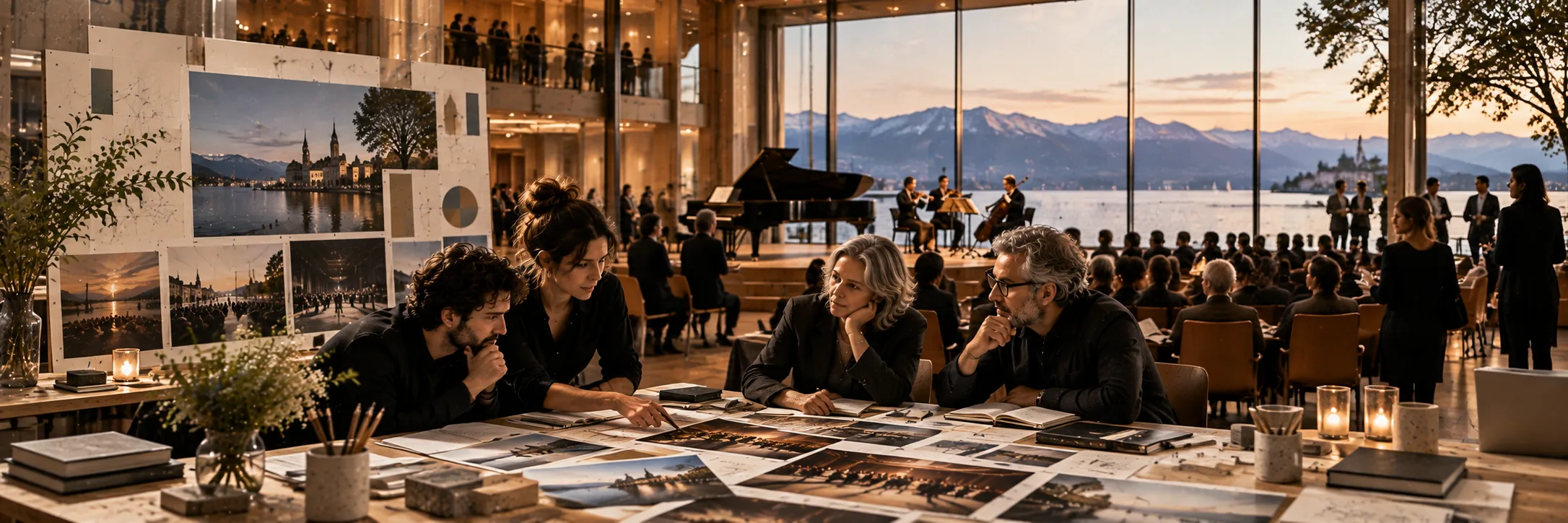
The Bodensee Philharmonie asked how a symphony orchestra develops further without losing its artistic identity, and what its public expects of a modern cultural orchestra. With HDTwin it ran a first pilot project on strategic audience research to gain a more differentiated view of the audience’s expectations and perspectives.
Which direction does the public support?
The pilot was not a popularity check on individual concerts. It asked which development the orchestra’s loyal audience recognises as its own: keeping the classic and Romantic repertoire at the centre while opening the concert to new formats, new places, and a stronger presence in the city. HDTwin answered by showing which themes unite that audience and which ones leave it divided.
Who was in the room
HDTwin built a panel of 18 Human Digital Twins, calibrated to mirror the behaviour, cultural sophistication, and psychological nuances of the Philharmonie’s most loyal and engaged audience — the concert public around the lake that already knows the orchestra. Each Twin carried the same context a real listener meets: the orchestra’s own site, its formats, and its season.
What HDTwin added
HDTwin is an interactive survey system that reports more than a majority. Instead of collapsing the public into one average, it runs a virtual deliberation in which participants propose statements and vote on them, then groups participants by how they voted. That makes visible how different groups within an audience argue and which themes are particularly binding or controversial — and the panel stays available for the next question instead of being spent on this one.
Eighteen conversations about the season
The panel held 18 conversations on the questions the orchestra actually faces: how people learn about concerts, what the website and the ticket purchase feel like, which formats they prefer and why, what matters most in a concert — the programme, the soloists, or the venue — what the last five seasons got right and wrong, and how the audience could be involved further. Thirteen of the conversations were open, so participants proposed the language themselves; one was a closed-question survey, and four ran as brainstorming sessions. About two hours of deliberation time were allocated to the set.
What the panel confirmed
The result was a map of the audience rather than a single score. The repertoire is not the contested part: the panel agreed unanimously that the classic and Romantic repertoire is what makes a concert worth going to, and that emotional depth and atmosphere matter more than novelty. What the public wants to change is the setting around the music — innovation in format and location, with the orchestra’s own Zukunftsmusik series and its sustainability-themed See You project described as inspiring and refreshing. Where people are lost is practical: personal recommendation still carries the audience, social media divides it, and ticket returns and exchanges are the clearest missing feature. Taken together, the analysis confirmed the direction the orchestra had chosen — artistic excellence combined with contemporary mediation, new concert formats, and a stronger connection in city society.
From one pilot to a broader study
The pilot is a building block rather than an endpoint: the orchestra is taking the experience into its strategic development, with the aim of strengthening its role as a cultural actor in the region. The next step the analysis points to is to broaden the base the panel is built on — starting from an existing survey, or a quantitative study on a larger and more representative sample of the Konstanz area — so the panel can answer for the whole potential audience rather than only the loyalists, and programming and communication ideas can be tested against it. The same panel then stays available for the next question: new formats, access, or participation.
The orchestra’s own announcement
The orchestra published its own announcement of the pilot on 7 September 2026, presenting the project as a confirmation of the strategic course it had already chosen.
30-minute online conversation; bring a programme decision and available audience material; next step is an audience-panel walkthrough.